
“Kharkiv Trace” of two Brzezinskis

Hearing the name Brzezinski (in Ukraine, Poland, and even all over the world), people will surely say that it is associated with such words as “Great Chessboard”, geopolitics, geostrategic studies and anti-communism. And it’s not just words! Indeed, Zbigniew Brzezinski is truly an iconic figure of American foreign policy in the second half of the 20th century. But we’re not going to talk about him as much as about a person who actually gave him life, cultivation of personality and certainly education – at Canada’s oldest and most renowned university, McGill University.
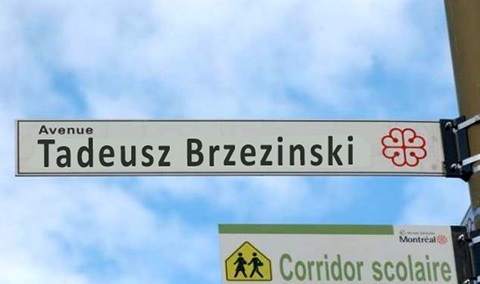
Let’s imagine such an unusual situation that can happen to anyone, including you, in a few days, weeks or months in Montreal (Canada). For example, you plan to meet your friends for a dinner at some cozy restaurant. You’re looking for information on Google about a place that will be convenient for all your friends… and it turns out that a Greek restaurant located on Tadeusz Brzezinski Street will be the best location for all of you. Who is he after whom this street in Montreal is named? The famous baker who patented delicious hot dog buns? Or is he probably a prominent Canadian athlete who won a gold Olympic medal in the javelin throwing? Or maybe he is the Canadian Army soldier who rescued a Dutch family from a burning house, risking his own life during World War II?
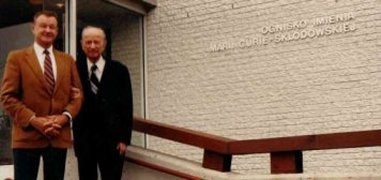
These are the questions that the current generation of Montreal Polonia may ask (especially those who came to the city in the 1980s and 1990s). It should be said that at that time there was a lot of talk in Polish media about Zbigniew Brzezinski (son of Tadeusz), who in 1977-1981 was the United States National Security Advisor. In difficult bipolar times, he had a significant influence on US foreign policy, postulating support by the United States of America of the anti-Soviet partisan movement in Afghanistan and the anti-communist movement Solidarity in Poland.
The father of this influential American politician, Tadeusz, was the son of Kazimierz Brzezinski (a judge from Przemysl, an adjunct of the Radymno city court from 1898 to April 1906) and Zofia Woroniecka. Both were buried in the main cemetery of Przemysl. Tadeusz Brzezinski was born in 1896 in the town of Zolochiv, Lviv region. On the 1st of September, 1902, he entered the four-year public school in Radymno. In 1905, Kazimierz Brzezinski was transferred to Przemysl. That is why his son graduated from the fourth grade already there, at the Jan Kanty Public School, located on Grunwaldzka Street. In September 1906, Tadeusz began to study in a Polish-language high school in Zasanie, Przemysl. In 1914, the young man passed the exam to get his school-leaving certificate, what is more – with honors, and got for this an appropriate diploma. The period of his higher education (in Lviv and Vienna) coincided with the stormy years of the First World War. After graduating from the Faculty of Law and Political Science at the University of Lviv, Tadeusz Brzezinski already on the 12th of December, 1918, as a volunteer of the 2nd Regiment of Lviv Riflemen, participated in the events of the Polish-Ukrainian War (1918-1919), and subsequently – in the Battle of Warsaw (1920). Thus, the character of the future diplomat was tempered in extremely harsh conditions – during the days of massacres, devastation and calamities.
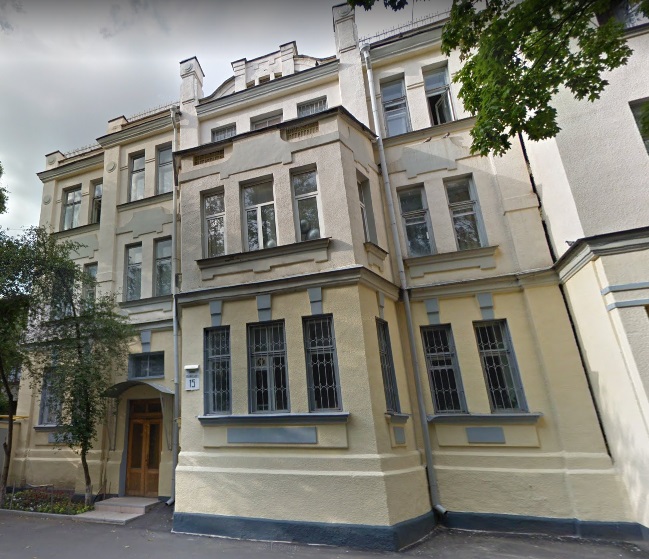
After accomplishing his military service, during which he was tested with fire and sword, Tadeusz began working at the Prosecutor General’s Office of the Second Polish Republic in Warsaw, and at the end of 1921 was hired by the Polish diplomatic service. In particular, he worked as a consul in Essen (1921 – 1922), Lille (1928 – 1931), Leipzig[1] (1931 – 1935) and Kharkiv (the 1st of November, 1936 – the 16th of December, 1937). This is where this small one-year episode in the life of our hero begins. It was closely related to the building located at Maksymilianovska Street, 15 (until 1936 it bore the name of Christian Rakovsky, and later – of Mikhail Olminsky). Earlier, the Embassy of the Republic of Poland in Kharkiv (1921-1924) was situated there, and later – the Consulate General of the Republic of Poland (1924-1934). On the 1st of August, 1934, its status was reduced to the level of a regular consulate in connection with the transfer of the capital of the Ukrainian SSR to Kyiv. The General Consulate of the Republic of Poland was transferred particularly thereto.
By the end of October 1936, Stanislav Sosnytsky, a Polish public and political figure, athlete, military officer, and diplomat, served as a consul in Kharkiv. On the last day of this month, the hero of our essay took over Sosnytsky’s reins. Actually, as we can see, Tadeusz Brzezinski’s presidency came during the last year of the Consulate’s work. In modern historiography, this era is called the Great Terror. So, one can only imagine under what conditions this Polish diplomat had to work and what difficulties he encountered. An example of the “fear of terror” of those days that prevailed at all levels of the Soviet government is described in the report of consul Brzezinski of the 16th June, 1937: “Before leaving for a vacation, I had a meeting with Mr. Nekunde [Karl Karlovich Baikalov – V.Y.], the diplomatic agent of the People’s Commissariat for Foreign Affairs in Kharkiv. I found him in a state of expressive nervousness and uncertainty, which are undoubtedly symptomatic for the current situation, and the entire government of the Soviet state, regardless of any particular personal reasons. However, Nekunde did not hide from me the fact that he stands on the eve of changes in relation to his own person, because, as he said, “everything is possible within this system”[1].
In the spring of 1937, the Soviet side demanded that Poland eliminate three consulates on the territory of the USSR. Demanding this, the USSR referred to the contents of the Polish-Soviet Consular Convention, which stipulated that Poland could have no more than one such diplomatic facility. Already during the liquidation of the consulate in Kharkiv, its contact person – Michal Kaminski – informed the Consular Department of the Ministry of Foreign Affairs (the 31st of October, 1937) against Tadeusz Brzezinski, as if the latter put hands on a silk, which was intended for the upholstery of the sofa in a reception room of the consulate[2]. This fact was confirmed by a parlormaid Bronislawa Ozimkuvna (and it is after all a time of terror). She noted that the silk was indeed used by Tadeusz Brzezinski’s wife to hem her fur cape[3]. Until today, neither documents nor testimony have been preserved to shed light upon the further course of this case, but the two facts remain intact – this was, of course, the reason for Tadeusz Brzezinski’s discharge, but despite all the accusations, after the completion of his “Kharkiv mission”, he nonetheless got a position of consul in Canada.
The Consulate of the Republic of Poland in Kharkiv was finally closed down on the 1st of December, 1937, and Tadeusz Brzezinski still formally fulfilled his duties until the 16th of December, 1937.
As we can see, the “Kharkiv period” of this diplomat’s life, despite its short duration, however, is entwined with myths. They continue to arise even in our time. Several years ago, a “fairly credible version” appeared in the media[4] that Tadeusz’s son – Zbigniew Kazimierz Brzezinski – was born in Kharkiv in 1928. It was stated that Tadeusz Brzezinski at that time allegedly worked as a diplomat of the government of Jozef Pilsudski in Ukraine (one should remember that the capital of the USSR until 1934 was Kharkiv). Since the Brzezinski family did not want the son’s documents to include the Soviet Union as his birthplace, the baby was registered later in Warsaw. The author argued that Tadeusz Brzezinski was born on the territory of Ukraine (in the city of Zolochiv, Lviv region), and therefore – allegedly did not want his son to have such a place of origin. It is clear that these speculations have nothing to do with reality, since even an “inexperienced historian” can check the biography of our hero and see that at the time of the birth of Zbigniew (in 1928), Tadeusz was in Lille (France). However, the very fact of interest of the Ukrainian mass media towards the figure of this diplomat speaks about his important role in the history of Polish-Ukrainian relations.
In 1938, Tadeusz Brzezinski was appointed Consul General of the Second Polish Republic in Montreal. After World War II, he remained in Canada and subsequently took the citizenship of that country (in 1951). After completing his diplomatic service, Tadeusz worked for the Canadian Polish Congress (he was also a President of the organization in 1952-1962). In 1956, a meeting of the Congressional High Council was convened at his initiative, at which a decision was made to conduct a campaign under the slogan “Bread for Poland”. Within a few months, 200.000 dollars were raised and transferred through Cardinal Stefan Wyszynski to buy medicaments and to support healthcare in the Polish People’s Republic. For some time, Tadeusz Brzezinski was also a member of the Polish Institute of Science in Canada. Among other things, he actively participated in the organization of the Congress of Artists, Writers and Journalists (Montreal, 1975). Until retirement, a former diplomat worked at the Quebec Ministry of Culture, helping to organize French-speaking cultural centers in small towns. Tadeusz Brzezinski died on the 7th of January, 1990, in Montreal. He was buried in a family crypt located in the Polish section of the city cemetery in Saint-Sauveur.
Thus, Tadeusz Brzezinski’s life and activities were intensive
and went through extremely difficult times, marked by large-scale changes in
the historical fate of Poland and Ukraine. Finally, it was this Polish diplomat
who brought Zbigniew Brzezinski into the world. The latter is mentioned
alongside Lech Walesa and John Paul II as one of the three key figures who
contributed to the overthrow of communism. Keeping this in mind, one should
also not forget the key role that his father played in shaping the personality
of Zbigniew.
Sources of information:
- Зонова I. «Яструб Пентагону» Збігнєв Бжезинський народився у Харкові? Його стежками пройшов наш кореспондент // 33-й канал. – 2014. – № 2. [Електронний ресурс]. – Режим доступу: https://web.archive.org/web/20141006135254/http://old.33kanal.com/12-2/4124-12-2-19
- Україна-Польща 1920-1939 pp.: З історії дипломатичних відносин УССР з Другою Річчю Посполитою: Документи і матеріали / ПАН України. Інститут історії України; упорядкування, коментарі, вступна стаття: Н. С. Рубльова, О. С. Рубльов. – К.: Дух і літера, 2012.
- Grażul T. Poselstwo i konsulat Rrzeczpospolitej Polskiej w Charkowie w latach 1921-1937 / Polska dyplomacja na Wschodzie w XX – początkach XXI wieku, red. Henryk Stroński, Grzegorz Seroczyński, Olsztyn-Charków: Wydawnictwo LITERA 2010. – s. 214-225.
- Frankiewicz J. Zbigniew Brzeziński i jego związki z Przemyślem. – Przemyśl, 1999. – S. 30-35.
- Wasilewski Z. P. Konsulat Generalny RP w Montrealu – Krótki zarys historyczny // Kronika Montrealska. – 11.03.2018. [Електронний ресурс]. – Режим доступу: http://kronikamontrealska.com/?s=saga+rodu+Brzezi%C5%84skich&x=0&y=0
- Wasilewski Z. P. Ulica im. Tadeusza Brzezińskiego w Montrealu // Kronika Montrealska. – 30.01.2013. [Електронний ресурс]. – Режим доступу: http://kronikamontrealska.com/2013/01/30/ulica-im-tadeusza-brzezinskiego-w-montrealu/#comments.
- Ziółkowska-Boehm A. The Age of Brzezinski / Dreams and Reality Polish Canadian Identities. – Toronto, 1984. – P. 111-114.
Prepared by Valentyn Yeriomin.
[1] Grażul T., Poselstwo i konsulat Rrzeczpospolitej Polskiej…, s. 224-225.
[2] Ibidem, s. 225.
[3] Ibidem, s. 225.
[4] Зонова I. «Яструб Пентагону» Збігнєв Бжезинський народився у Харкові? Його стежками пройшов наш кореспондент // 33-й канал. – 2014. – № 2 [Електронний ресурс]. – Режим доступу: https://web.archive.org/web/20141006135254/http://old.33kanal.com/12-2/4124-12-2-19.
[1] While working in Leipzig, Tadeusz Brzezinski helped Jews, who were imprisoned by Nazis, to emigrate. For this he was enrolled to the Golden Book of the Jewish National Fund in Israel, and in 1978 he got an official letter of appreciation from Israel’s Prime Minister Menachem Begin.